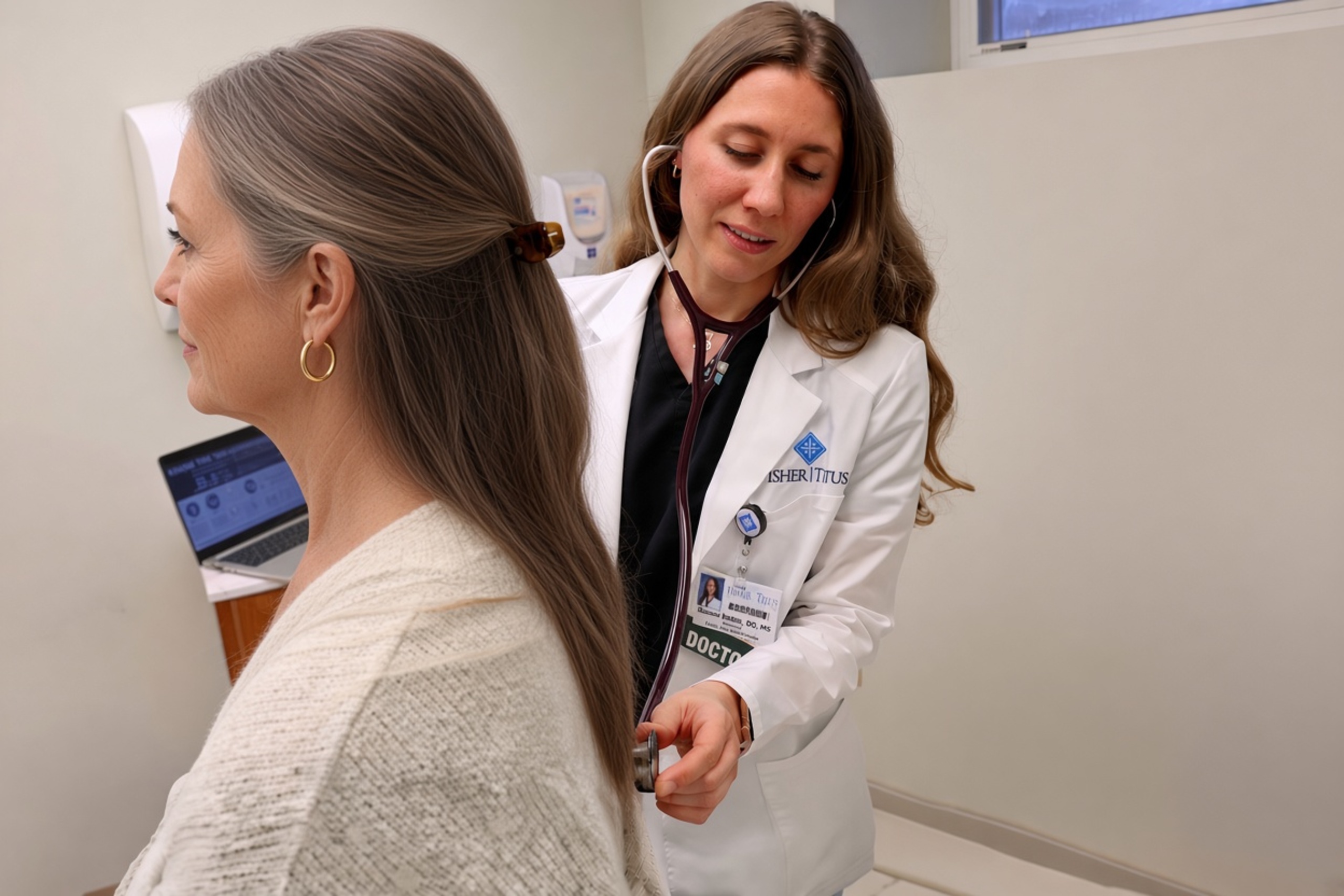
COPD tends to build slowly, and the earliest signs are the kind most of us wave off. Getting winded on the stairs feels like age catching up. A cough that lingers gets chalked up to a cold that will not quit or years of smoking. Because the changes come on gradually, it is easy to adjust your routine without noticing how much your breathing has changed.
That slow build is exactly why paying attention early matters. COPD cannot be reversed, but catching it sooner gives you more room to slow its progression and protect the things you enjoy doing. At Fisher-Titus, our primary care team is here to help you make sense of these subtle breathing changes and get answers close to home.
What Is COPD?
COPD, or chronic obstructive pulmonary disease, is a long-term lung condition that makes it harder to breathe as the airways become inflamed and narrowed. It is an umbrella term that covers chronic bronchitis and emphysema, and many people live with a combination of both.
“COPD is the most common lung disease we see, especially with the aging population,” said Robert Pecl, PA at Fisher-Titus. It is a progressive condition, which means it tends to worsen over time, but it is also manageable with the right care. One of the trickier parts is that lung damage is often already underway before symptoms feel obvious, so the disease can be further along than a person realizes by the time they notice a problem. That is where our lung and respiratory care services can help.
Why Early COPD Symptoms Are So Easy to Miss
Early COPD symptoms are usually mild, they come and go, and they look a lot like other everyday things. Shortness of breath gets blamed on age or extra weight. A cough gets blamed on allergies. Low energy gets blamed on a busy schedule or simply being out of shape.
People also tend to adapt without realizing it. They take the elevator instead of the stairs, skip the longer walk or pace themselves through chores, which quietly hides how much their breathing has shifted. “They may feel totally fine at rest, then start walking up the stairs and feel more winded than they used to,” Pecl said. Recognizing that pattern, rather than working around it, is what makes early evaluation possible.
Early Warning Signs of COPD to Watch For
COPD can look different from person to person, but a handful of early signs show up again and again. Here is what to pay attention to:
- Shortness of breath during everyday activities: Feeling winded on the stairs, during light chores or on a walk you used to handle with ease can be one of the first clues.
- A chronic cough that lingers: A cough that sticks around for weeks, sometimes called a smoker’s cough, is worth noting even when it feels routine.
- Increased mucus or phlegm: Coughing up more than usual is common. Pecl noted that a portion of COPD patients produce noticeably more phlegm than the average person.
- Frequent respiratory infections: Colds that settle into the chest, or repeated bouts of bronchitis or pneumonia, can point to underlying lung trouble.
- Wheezing or chest tightness: A whistling sound when you breathe or a tight feeling in the chest can come and go in the early stages.
- Unusual fatigue or reduced stamina: When the lungs work harder to move air, everyday activities can leave you more tired than they should.
Any one of these signs can have another explanation. Several of them together, or symptoms that keep returning, are a good reason to check in with a provider.
What Causes COPD and Who’s Most at Risk?
The leading cause of COPD is long-term exposure to things that irritate the lungs. Cigarette smoke is the most common by far, but secondhand smoke, air pollution and workplace dust, fumes or chemicals can all play a part. There is also a genetic cause called alpha-1 antitrypsin deficiency, an inherited condition that can lead to COPD even in people who have never smoked.
Some factors raise the risk more than others. You may be more likely to develop COPD if you have:
- A history of smoking, whether current or past
- Reached age 40 or older
- Long-term exposure to lung irritants at work or at home
- A history of respiratory infections in childhood
- A family history of COPD or alpha-1 antitrypsin deficiency
When to See a Provider About COPD Symptoms
Symptoms Worth Getting Checked
There is no need to wait for symptoms to become severe before getting answers. Breathing changes are easier to evaluate and manage when they are caught early, and an appointment can bring peace of mind either way. Consider reaching out to a provider if you notice:
- Shortness of breath that is new or getting worse
- A cough that lasts more than a few weeks
- Repeated chest infections
- Breathlessness that limits your normal activities
Getting checked early does more than ease worry. It can open the door to treatment sooner. As Pecl put it, “What we look for as providers isn’t necessarily quantity of life, it’s quality of life.” Identifying COPD early gives you and your care team more options to protect that.
When Symptoms Become an Emergency
Some breathing symptoms need urgent attention. Call 911 or seek emergency care right away if you experience:
- Severe breathlessness or the feeling that you cannot catch your breath
- Lips or fingernails that look blue or gray
- Sudden confusion or trouble staying alert
- A racing or pounding heartbeat
Those can be signs that your body is not getting enough oxygen. Do not try to wait them out.
Don’t Ignore the Signs. Talk to Fisher-Titus.
Unexplained breathlessness or a nagging cough is worth a conversation. Finding COPD early will not undo it, but it opens the door to treatments that can slow its progression and help you keep doing what you love. “Your quality of life can be improved with proper treatment,” Pecl said, offering a reassuring word for anyone nervous about coming in.
A primary care relationship is a dependable way to stay ahead of changes in your health. If you have noticed a difference in your breathing, we are here to help. Schedule an appointment to talk through your concerns with a Fisher-Titus provider.