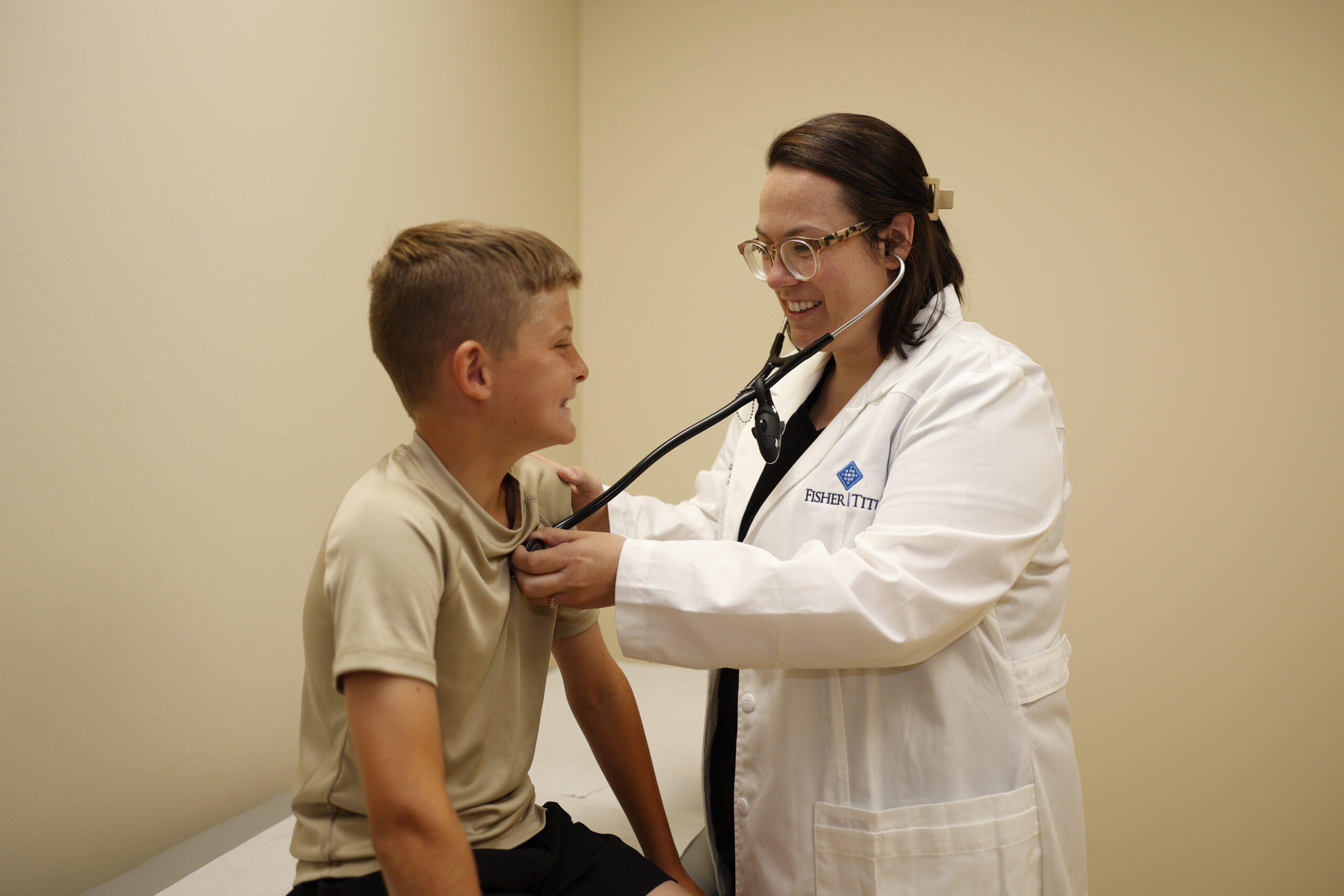
The back-to-school season gets busy fast. Between supply lists, new schedules and sports sign-ups, a checkup can slip to the bottom of the list. But a back-to-school physical is worth putting near the top. It keeps your child up to date on school requirements. It also gives their provider a chance to see how your child is growing and developing.
Our primary care and pediatric teams see these visits as more than a form to sign. They’re a chance to check in on your child’s health, answer your questions and get to know your child from one year to the next. “We recommend annual physical exams for all of our patients, from about 3 years until they graduate from our practice,” said Dr. Paul Wnek, MD, FAAP, pediatrician at Fisher-Titus. “It enables us to ask questions, do teaching and find medical problems before they progress.”
What is a Back-to-School Physical?
A back-to-school physical is a routine checkup. You may also hear it called a well-child visit or annual wellness exam. It looks at your child’s overall health and development. It’s not the same as a sick visit. Instead of treating one problem, it focuses on how your child is doing overall and what may need attention before the year starts.
Many schools ask for proof of a recent physical, and some require certain vaccines. So, the visit often takes care of that paperwork too. It’s also a good time to bring up anything on your mind. That could be a question about growth, sleep, mood or getting cleared to play a sport.
What’s Checked During a Back-to-School Physical?
Growth, Vital Signs and Physical Development
During a child’s physical exam, the provider checks the basics. That includes height, weight, body mass index, blood pressure and heart rate. It also includes vision and hearing screenings. From there, the provider does a head-to-toe check. This looks at the skin, spine, abdomen, heart and lungs.
Tracking those numbers each year is part of what makes an annual visit helpful. When a provider sees the same child over time, they can spot small changes early. They can also compare the results to past visits instead of looking at a single snapshot. “We check the child’s height, weight and body mass index,” Dr. Wnek said, “and we’ll give either dietary or exercise counseling based on how their body mass index is.”
Immunization Review and Updates
A well-child visit is also a chance to review your child’s vaccine record and see if anything is due. A few vaccines often come up during the school-age years. Those include the Tdap booster, the meningococcal vaccine and the HPV vaccine. Which ones your child needs depends on their age and the current recommendations. Staying up to date helps protect your child and their classmates.
Your provider will point out anything that’s overdue. In most cases, they can give those vaccines at the same visit, which saves a separate trip. Dr. Wnek said certain visits tend to line up with these updates. “Especially the five-year visit, the pre-junior high visit and again around 16, we’ll have some vaccines the kids will be required to have,” he said.
When Should You Schedule a Back-to-School Physical?
Try to schedule at least four to six weeks before school starts. That leaves time for any follow-up care, a specialist referral or a vaccine update. It also helps you avoid a rush in the final week. Summer appointments fill up at many offices. Waiting until August can mean fewer open slots.
Dr. Wnek encourages families to plan ahead, especially for athletes. “During the summer we’re relatively less busy, so it allows us time to get them in when it’s convenient for the parents,” he said. For younger children, he offered an easy way to remember: “It’s usually good to do them around their birthday.” His advice is simple: “Schedule it early in the summer and don’t wait until the last minute.” It also helps to check whether your child’s school has forms to fill out at the visit, so you can download them ahead of time.
What to Bring to the Appointment
A few things can help the visit go smoothly and cut down on follow-up calls:
- Your child’s vaccine records or vaccination card
- Insurance card and a photo ID
- A list of current medications, vitamins or supplements
- Any school-required physical or sports clearance forms
- Notes on health questions or concerns you want to raise
Some schools have their own physical forms that a provider needs to fill out and sign, so having those with you can save a return trip. “The most important thing for them to bring is any forms they’re required to bring back, especially sports physical forms,” Dr. Wnek said. He also encourages parents to take part in the visit: “It’s important that both the parent and the child are involved in answering the questions, so the answers can be most accurate.”
Sports Physicals
A sports physical, also called a preparticipation physical evaluation (PPE), checks whether a child is medically cleared to play sports. It looks at muscle, joint and heart health and reviews any past injuries or concussions, along with personal and family health history. The goal is to help kids play safely, and if something needs attention, to find activities the child can still enjoy.
“In a sports physical we focus on everything, but especially the cardiac exam, making sure we get a good, thorough listen to the heart and the lungs,” Dr. Wnek said. “We also do a thorough musculoskeletal evaluation, looking for any restrictions or limitations that could affect a particular type of sport.”
A well-child visit and a sports physical can sometimes be combined, but they serve different purposes, and many schools or sports programs ask for a separate clearance form. Seeing a provider who already knows your child adds something a group screening cannot. “Since they’re patients of ours, we can review medical problems they’ve had in the past, sometimes go into more detail on problems and recommend testing or treatment,” Dr. Wnek said. If your child plans to play, mention the sports physical when you schedule.
Back-to-School Health Starts Here
A back-to-school physical is a simple step that helps set your child up for a steady year. It covers far more than school paperwork. It’s a chance to see how your child is growing, review vaccines and talk through any questions. It also helps build a relationship with a provider who gets to know your child over time.
If you need a well-child visit or a sports physical for a returning athlete, the Fisher-Titus primary care and pediatric teams are here to help. Schedule an appointment with the Fisher-Titus primary care or pediatric team today.