Healthy Carbs Explained
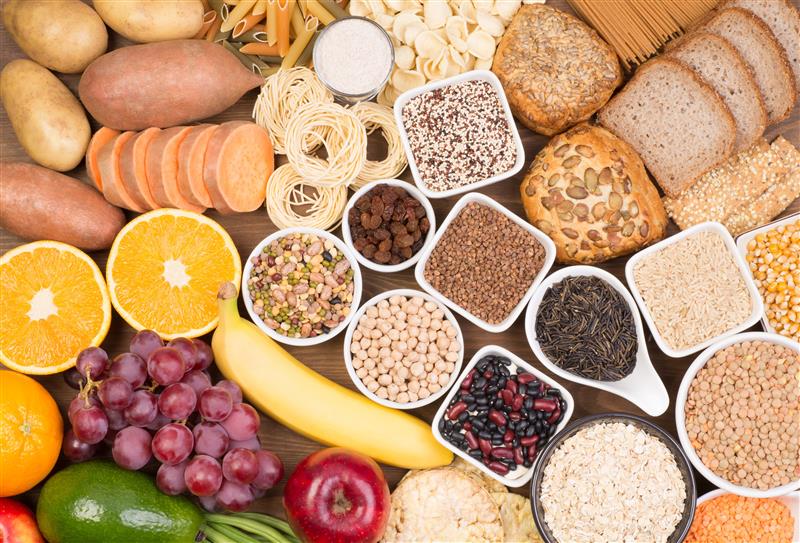
Carbohydrates, more commonly known as “carbs”, are a macronutrient and naturally occur in grains, fruits, vegetables, milk, nuts, seeds, and legumes. Carbs can also be added by food manufacturers to processed foods in the form of starches and added sugars.
Simple Carbs
There are two types of carbohydrates: simple and complex. Simple carbs are digested quickly and can cause a spike in blood sugar which can make you feel hungrier sooner. However, it is important to know milk and fruit contain simple carbs but are nutritious foods that should be included in the diet in moderate amounts. Typically, three servings of dairy and two to three servings of whole fruit daily is recommended. Other foods that contain simple carbs that should be avoided are things like pop, sports drinks, desserts, and candy.
Complex Carbs
Complex carbs are longer molecules that are naturally found in whole grains, vegetables, and legumes and typically have fiber which make you digest them slower. This leads to a slow and steady release of glucose, which prevents the spike in blood sugar. When choosing both simple and complex carbs it’s most important to choose healthy carbs which can be found in whole foods: milk, fruit, vegetables, whole grains, and legumes as these contain the most amount of nutrients.
The Dietary Guidelines for Americans recommend that carbs make up 45-65 percent of your total daily calories. The nutrition label on packaged foods will show you the total carbohydrate content which includes sugar alcohols, fiber, starches, and sugars. If you’d like professional guidance on how these recommendations fit your individual dietary needs, talk to your primary care provider about Nutritional Counseling.
Benefits of Carbs
Although all carbs often get a bad rap, they are important to your health for a variety of reasons including:
Providing Energy
Did you know that carbs are your body’s main source of energy? They provide fuel to several organs and systems including your brain, kidneys, heart muscles, central nervous system, and digestive system.
Protecting Against Disease
Evidence has shown that whole grains and dietary fiber from whole foods may help reduce the risk of cardiovascular disease, obesity, and Type 2 diabetes.
Controlling Weight
This one may be a bit confusing because so many fad diets play off carbs as the bad guy! Research has proven that eating plenty of fruits, vegetables, milk, and whole grains can actually help you control your weight. Carbs aid in weight control by helping you feel full on fewer calories. In fact, there’s little evidence to show that a diet rich in healthy carbs leads to weight gain or obesity.
As with anything, practicing moderation is key. To help make sure you are focusing on healthy carbs, make half of your plate full of fiber-rich and non-starchy vegetables, a quarter of your plate whole grains or starchy foods, and another quarter a lean protein. To help with the less nutritious carbs in your diet, opt for replacements versus eliminating them entirely such as replacing desserts with fruit or choosing whole grain bread versus white bread.
If you’re considering professional guidance, the Fisher-Titus team is here to help. Find a doctor through our network of primary care and specialty providers to talk about your nutrition and overall health goals.